Top 5 used 3D laser scanners worth buying in 2026
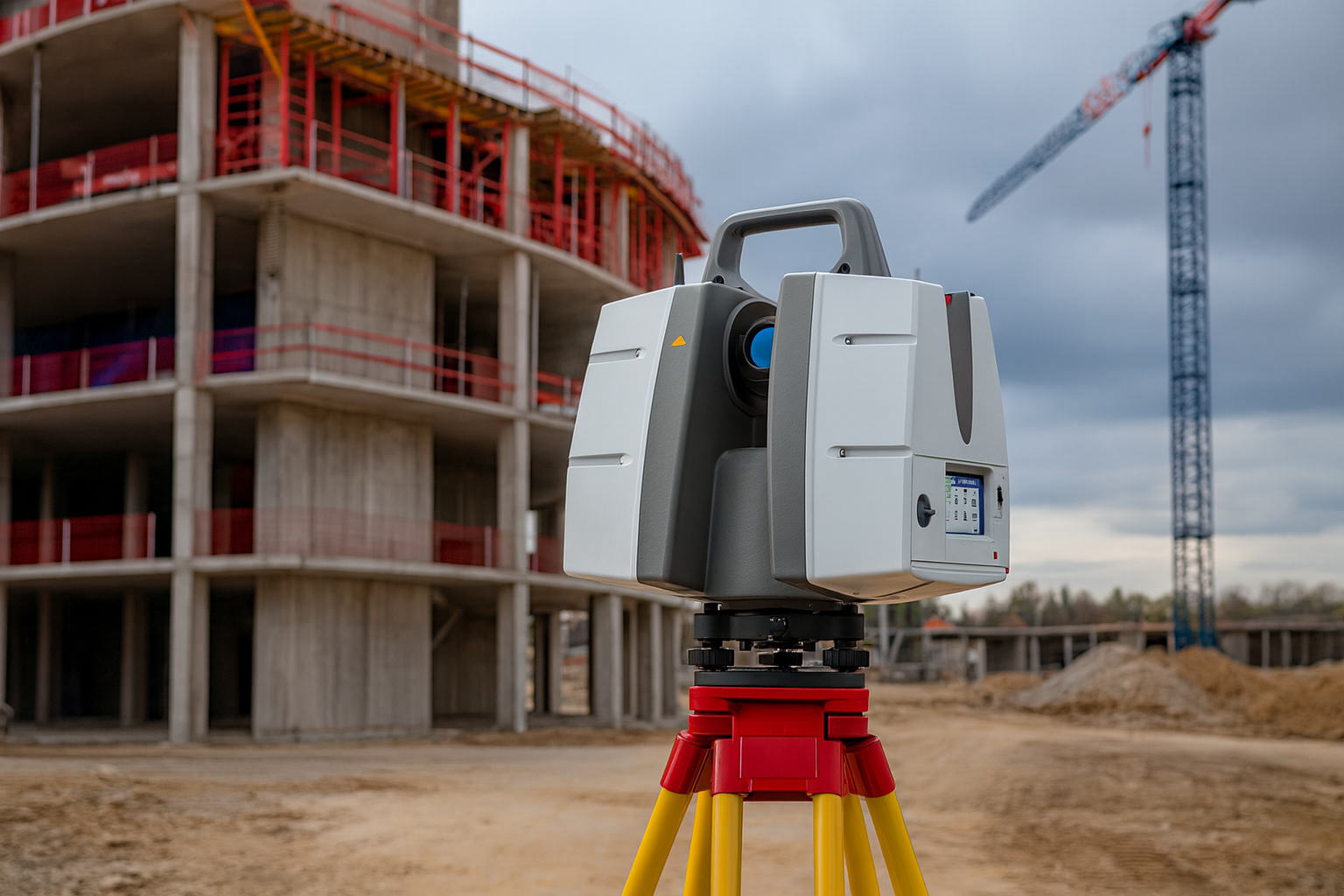
In 2026 laser scanning technology remains one of the core tools for precise measurement, BIM design and digital twins. New high‑end devices are expensive, but buying quality used equipment allows you to obtain industrial‑grade functionality at a lower cost.
Why buy a used scanner
Laser scanners generate a three‑dimensional point cloud by measuring millions of points per second. Such equipment is used in construction, engineering, facility management and forensics, yet a new device can cost tens of thousands of dollars. Purchasing a well‑maintained used scanner reduces costs without sacrificing accuracy. It is important to verify the instrument’s condition and calibration certificate; however, well‑known brands are designed for years of use and retain their performance. Below is an overview of the most interesting deals of 2026.
1. Leica ScanStation P50
Key features:
-
Range and speed. This is a long‑range scanner: it generates a point cloud of 1 million points per second and can see objects more than 1 km away. Its fast measurement module produces low‑noise data and uses a dual‑axis compensator.
-
Accuracy. The system delivers range error of 1.2 mm + 10 ppm up to 270 m and 3 mm + 10 ppm at the maximum distance; angular accuracy is 8 arc seconds horizontally and vertically. A target acquisition feature achieves 2 mm deviation at 50 m.
-
Ruggedness. The scanner operates between –20 °C and +50 °C and meets the IP54 protection class, allowing work in dusty or wet conditions.
-
Integration. Leica provides the Cyclone FIELD 360 mobile app for field registration and quality checks.
-
Price. In 2025 Datum Tech Solutions listed a used ScanStation P50 for about USD 55 000 (new price around USD 96 000), making it the most expensive device in this overview.
Pros:
-
The greatest range among the models considered, suitable for surveying quarries, dams and large structures.
-
High geometric accuracy and low noise produce reliable models.
-
Rugged design and ability to work in bad weather.
Cons: -
High cost even on the second‑hand market.
-
Bulky and heavy – requires a tripod and specialist transport.
-
Fully using all functions requires an experienced operator.
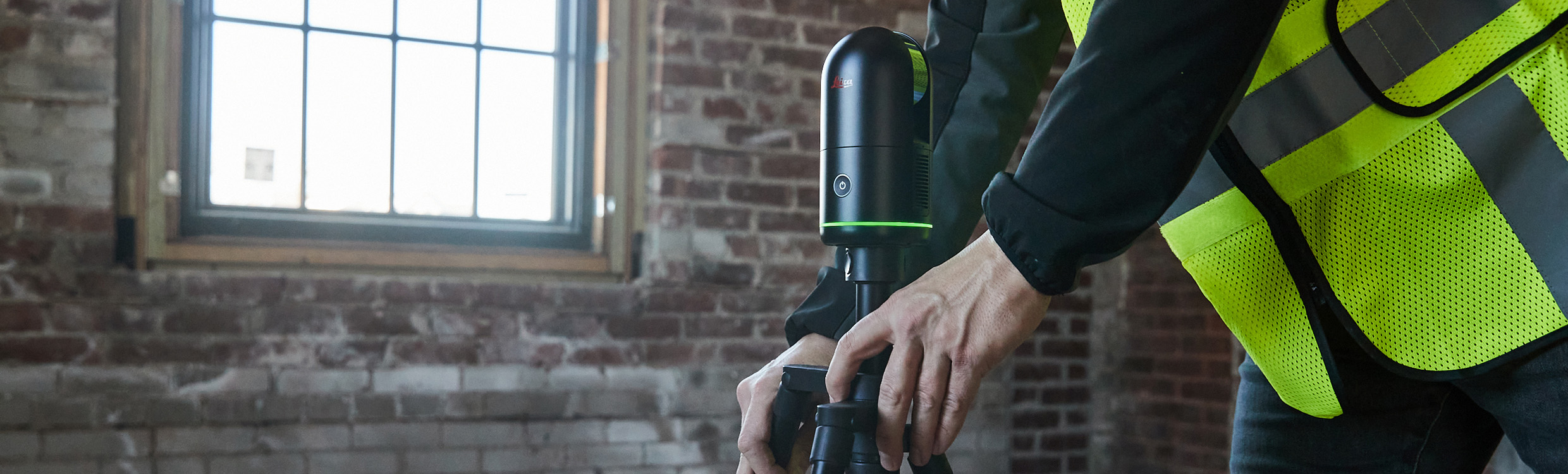
2. Leica BLK360 (G1/G2)
Key features:
-
Compact and fast. The BLK360 is the smallest scanner in Leica’s range. It weighs about 1 kg and fits in the palm of your hand; it collects 360 000 points per second while capturing images with three 5‑MP cameras covering 360° × 300°. A complete scan with panoramic imagery takes less than 3 minutes.
-
Range and accuracy. The scanner works between 0.6 m and 60 m and delivers 4 mm accuracy at 10 m and 7 mm at 20 m. 3D point accuracy is 6 mm at 10 m and 8 mm at 20 m.
-
Autonomy. The internal battery supports up to 40 scans, and 32 GB memory holds roughly 100 average‑density scenes. A built‑in IMU records tilt and relative positioning.
-
Portability and control. The device is operated by one button or via an iPad using the ReCap Pro Mobile app; data is automatically registered on site.
-
Price. In 2025 Artech Equipment Supply offered a used BLK360 for about USD 4 285, while a new unit cost around USD 19 077.
Pros:
-
Minimal weight and simple operation – ideal for architects, designers and inspectors.
-
Fast scanning cycle and built‑in camera provide HDR images with geo‑tagging.
-
Affordable second‑hand price compared with professional models.
Cons: -
Limited range (up to 60 m) and lower accuracy restrict use on large sites.
-
Non‑swappable battery means you must monitor charge during heavy use.
-
Compact design is less shock‑resistant than heavier scanners.
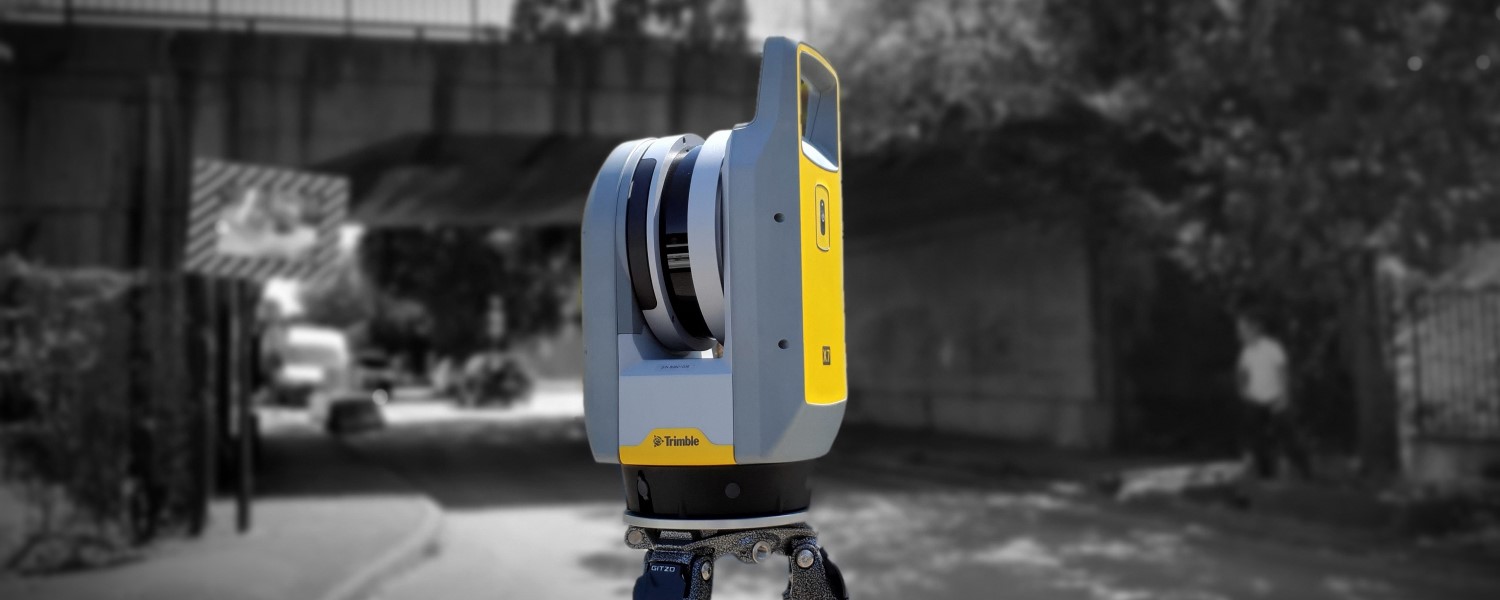
3. Trimble X7
Key features:
-
Self‑calibration and self‑levelling. The Trimble X7 provides automatic calibration and self‑levelling. The user does not need targets or manual adjustments – the instrument registers scans in the field.
-
Ease of use. Trimble Registration Assist speeds up processing and produces a calibration report; control is performed through the Perspective app on a tablet. The scanner comes with a 2‑year warranty and has an IP55 rating.
-
Portability. The device weighs about 5.8 kg; it includes a transport backpack and can be quickly set up.
-
Price. According to Seiler Geospatial, a used Trimble X7 bundle with a T10 tablet and Perspective software cost USD 16 995 (new bundle – USD 47 000).
Pros:
-
Easy start‑up thanks to automatic calibration and self‑levelling.
-
Convenient control via tablet and built‑in registration algorithms.
-
Moderate second‑hand price for a capable system.
Cons: -
Designed for medium ranges; for long‑range work Leica P50 is better.
-
Heavier and larger than portable models.
-
Despite the discount, the price remains high for small businesses.

4. FARO Focus S350
Key features:
-
Range and accuracy. The scanner measures objects between 0.6 m and 350 m and provides ±1 mm accuracy; angular accuracy is 19 arc seconds, and 3D positional accuracy is 2 mm at 10 m and 3.5 mm at 25 m. This combination makes it versatile for construction and industry.
-
Speed. It supports multiple modes – up to 976 000 points per second – allowing the mesh density to be tailored to the task. A single scan takes only minutes.
-
Protection. The Focus S350 is IP54 rated, works between –10 °C and +60 °C and includes GPS, compass, altimeter and dual‑axis compensator sensors. The scanner weighs 4.2 kg with battery, which offers around 4.5 hours of operation.
-
Price. Artech Equipment Supply listed a used S350 for about USD 3 575, while the Rodohep marketplace listed it at USD 9 900; the difference depends on configuration and condition.
Pros:
-
Good balance of range and precision at a relatively low price.
-
Lightweight, easy to transport and long battery life.
-
Wide range of built‑in sensors enables operation without extra accessories.
Cons: -
Not as high accuracy as the Leica P50 or Trimble X7 – calibration should be checked.
-
Scanner requires annual verification to maintain accuracy.
-
The lowest price often corresponds to older units without warranty.
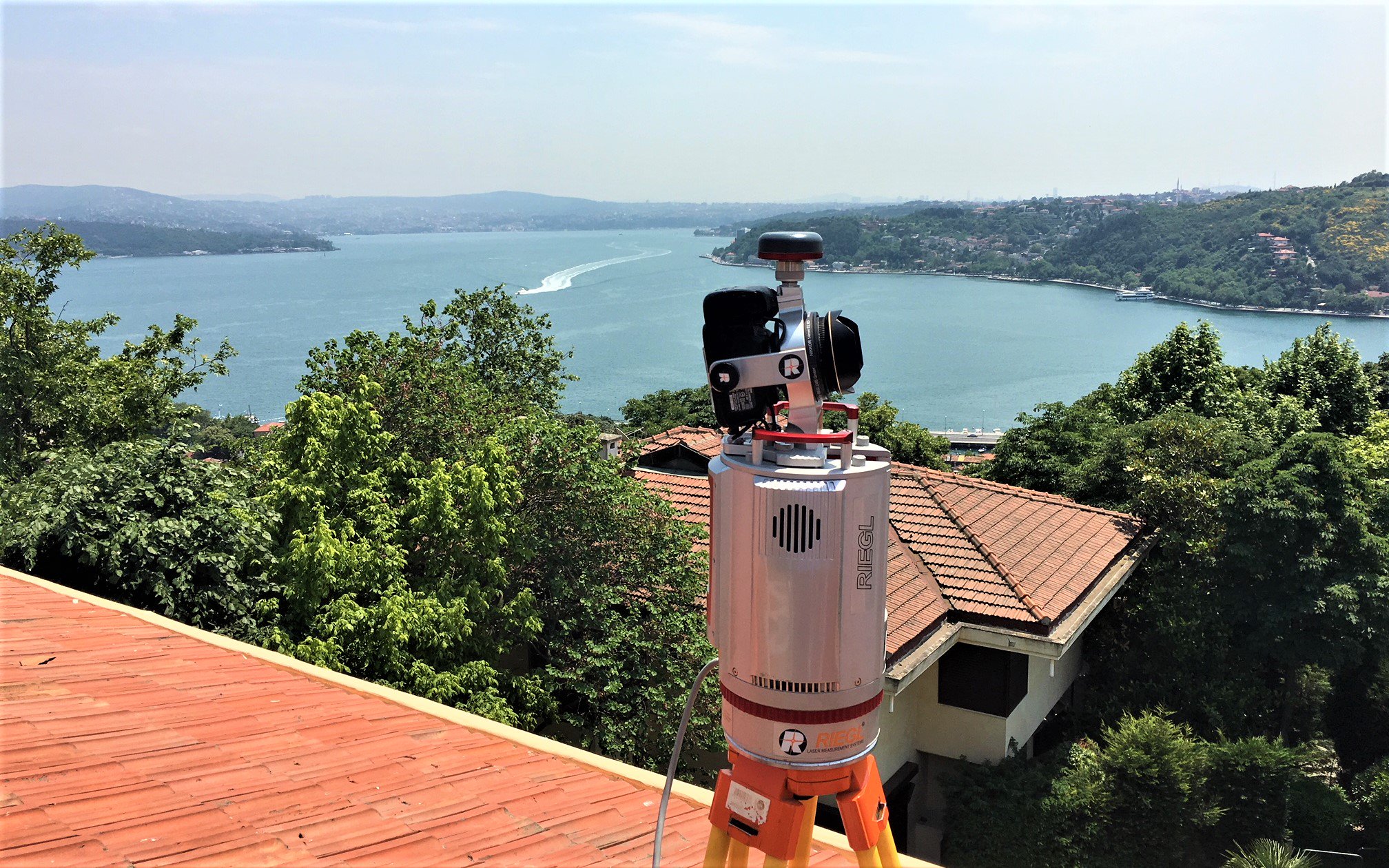
5. Riegl VZ‑400i
Key features:
-
Speed and range. The Riegl VZ‑400i is a next‑generation hybrid scanner. It supports a pulse repetition rate of up to 1.2 MHz and collects up to 500 000 measurements per second. Maximum range reaches 800 m with a 100° × 360° field of view.
-
Accuracy and technology. The system uses echo digitisation and integrated orientation sensors (IMU, compass, barometer) for high accuracy. It employs two processors: one records and processes signals, the other handles automatic registration, georeferencing and real‑time analysis.
-
Connectivity. The device features 3G/4G LTE modem, Wi‑Fi and Ethernet ports for data transfer and cloud connectivity. On‑board apps support slope monitoring, project comparison and angle assessment.
-
Price. TheXRFStore sold a used VZ‑400i for about USD 12 000 in 2025, while new units from official dealers cost over USD 17 000.
Pros:
-
High data acquisition speed and long range suit geodesy, mining and slope monitoring.
-
Modular architecture and integrated sensors reduce post‑processing time.
-
Real‑time cloud connectivity and support for custom apps for specialised tasks.
Cons: -
Relatively high second‑hand price compared with the FARO S350.
-
System complexity requires trained personnel and is often aimed at large projects.
-
Limited availability – second‑hand resale is less common than for popular brands.
Conclusions
Selecting a used laser scanner in 2026 depends on the tasks and budget. If a long‑range instrument for large projects is needed, the Leica ScanStation P50 is suitable, although its cost remains high. For mobile indoor work and quick scanning, the Leica BLK360 is a good choice. The Trimble X7 offers automatic calibration and ease of use; it is ideal for construction verification and engineering surveys. The FARO Focus S350 provides an excellent balance of price, accuracy and features and can become a workhorse for medium‑sized projects. The Riegl VZ‑400i targets professionals who require the fastest data acquisition and deep analytics. In all cases, it is crucial to check the instrument’s technical condition and ensure that the supplier provides a calibration certificate before purchase.
Recent post

Top‑3 GNSS Receivers for Getting Started