
Handheld Scanners

Sort By:
Newest Listing
Can’t find what you are looking for?

Handheld 3D Scanners

What is a handheld 3D scanner used for?

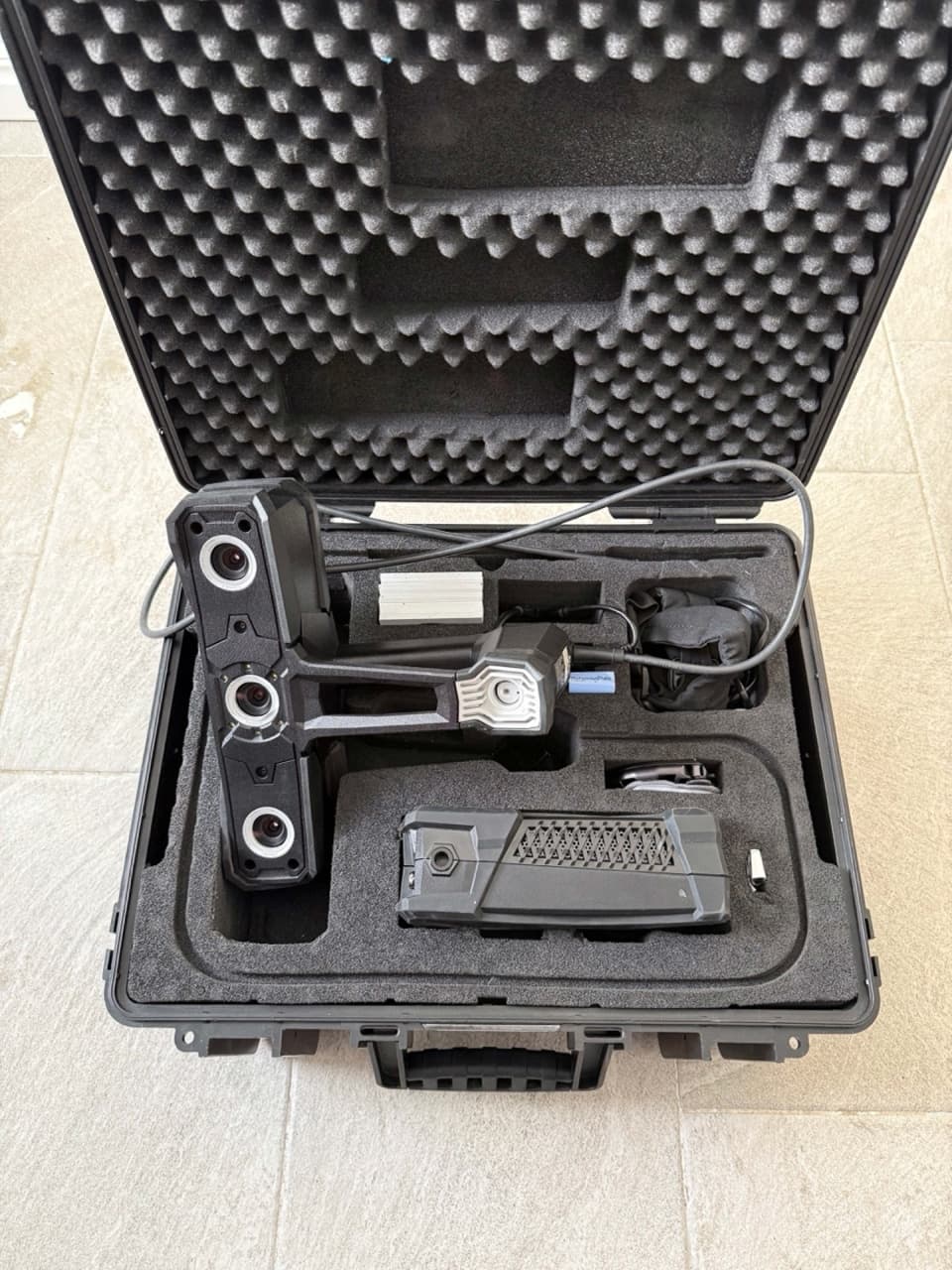
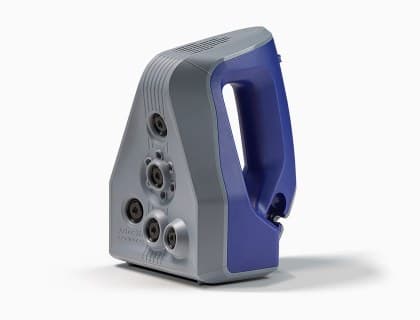
A handheld 3D scanner is used to capture the shape of real objects and convert them into digital 3D models. The operator moves the scanner around the object while the device records thousands or millions of spatial points. These points form a point cloud that can later be converted into meshes or CAD models. This technology is widely used for reverse engineering, inspection, product design, and digital documentation of physical objects.

How accurate is a handheld 3D scanner?

Professional handheld scanners typically provide accuracy between ±0.05 mm and ±0.3 mm. The exact precision depends on calibration quality, scanning distance, and surface characteristics such as color or reflectivity. Structured light scanners often achieve higher precision on smaller components. Laser-based handheld scanners usually perform better when scanning larger or darker surfaces.

What is the difference between a handheld scanner and a laser scanner?

A handheld scanner is moved around the object, while a laser scanner usually captures data from fixed positions. Handheld devices are ideal for scanning smaller objects and complex geometries. Fixed-position scanners are designed for capturing large environments such as buildings, construction sites, or industrial facilities. Because of this difference, both technologies are often used together in engineering workflows.

Can handheld scanners capture large objects?

Yes, handheld scanners can capture large objects, but accuracy may decrease as the scanning area increases. During large scans, small tracking errors can accumulate because the device continuously estimates its position while moving. This can slightly reduce dimensional precision over long distances. For this reason, handheld scanners are usually preferred for parts, equipment, or localized scanning tasks.

Do handheld scanners work outdoors?

Some handheld scanners can work outdoors, but lighting conditions can affect performance. Structured light scanners may struggle in direct sunlight because the projected pattern becomes difficult for sensors to detect. Laser-based handheld scanners generally perform better outdoors. Shaded conditions usually provide the most stable scanning results.

What file formats do handheld scanners produce?

Handheld scanners typically produce point cloud and mesh files used in 3D modelling. Common point cloud formats include E57, LAS, PTS, and XYZ. Mesh formats such as STL, OBJ, and PLY are frequently used for engineering analysis, 3D printing, and visualization. These formats allow the scanned data to be imported into CAD or modelling software. However, handheld scanners are significantly faster for capturing complex free-form surfaces and large numbers of measurement points. Many inspection workflows combine scanning and metrology by using a coordinate measuring machine for final verification and a portable cmm for flexible shop-floor measurements.

What industries use handheld 3D scanners?

Handheld scanners are widely used in manufacturing, engineering, architecture, and cultural heritage documentation. Automotive and aerospace companies use them for inspection and reverse engineering of mechanical parts. Architects and conservation specialists use them to digitize buildings and historical artifacts. Industrial teams also use handheld scanning to document equipment before repairs or upgrades.

What should I consider when choosing a handheld 3D scanner?

The most important factors are accuracy, scanning range, portability, and software compatibility. Different technologies are optimized for different tasks, such as high-precision inspection or fast capture of larger objects. It is also important to consider calibration procedures, scanning speed, and post-processing tools. The best scanner depends on the size and complexity of the objects you plan to capture.

Handheld Scanners - Professional

Surveying Solutions

A handheld scanner is a portable 3D measurement device that captures the precise geometry of physical objects or environments using laser light or structured light technology.

These instruments allow a single operator to rapidly generate high-resolution point clouds by simply moving the device around the target area. By integrating Simultaneous Localization and Mapping (SLAM) algorithms, these systems provide real-time data registration, making them essential for rapid as-built documentation and reverse engineering.


Key Features & Specifications


Point accuracy: $\pm 0.05~mm$ to $\pm 3~mm$ — provides high-precision data for mechanical parts or general spatial measurements in construction.

Scan speed: 500,000 to 2,000,000 points per second — enables the near-instantaneous capture of complex surfaces and large indoor environments.

Operating range: 0.1 m to 8 m — supports both close-range object inspection and medium-range spatial mapping in confined spaces.

Tracking technology: LiDAR SLAM and integrated IMU — allows the handheld laser scanner to determine its position accurately without the need for external targets.

Light source: Blue LED or Class 1 laser — ensures safe operation while providing the high contrast needed for scanning dark or reflective surfaces.

Output formats: STL, OBJ, E57, and LAS — ensures full compatibility with major BIM and CAD platforms such as Revit and AutoCAD.

Weight: 0.8 kg to 1.5 kg — facilitates long-duration handheld 3d laser scanner operation without operator fatigue during site surveys.


How to Choose the Right Handheld Scanners


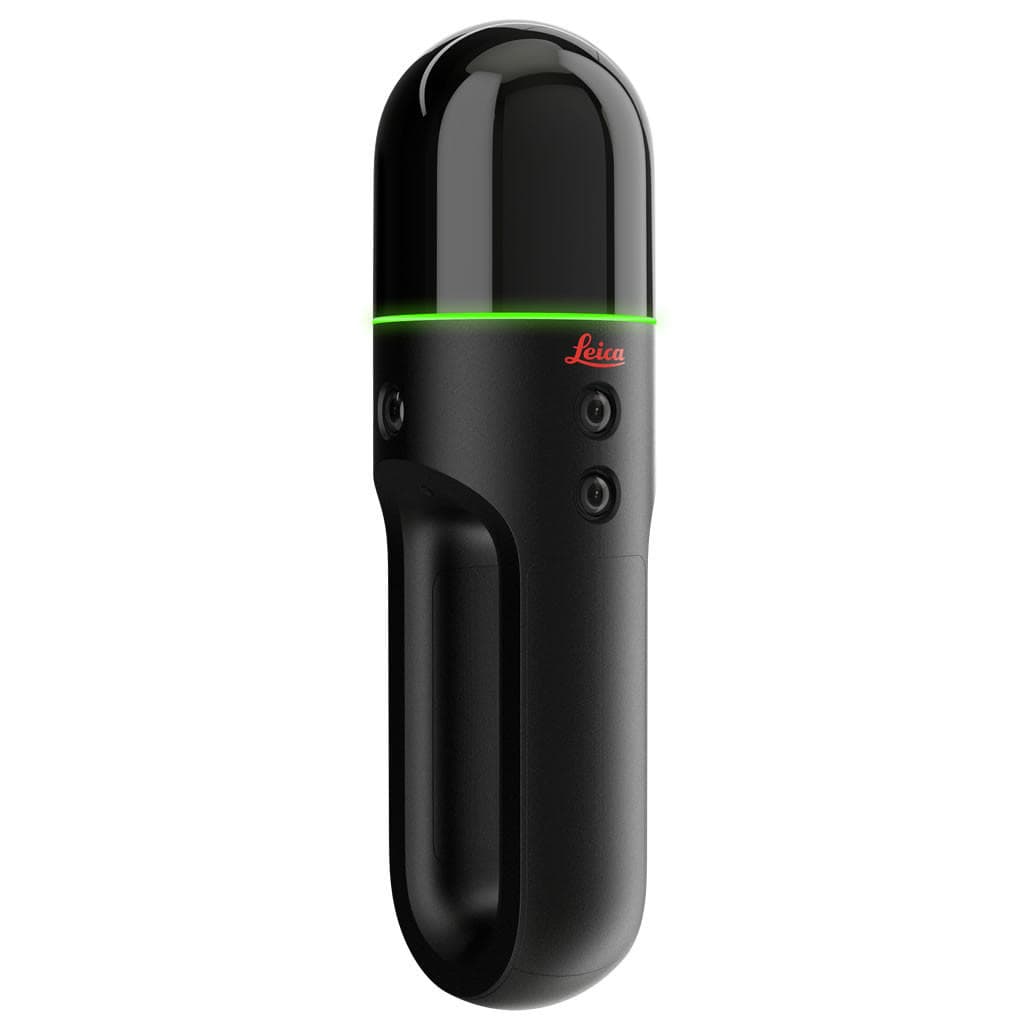
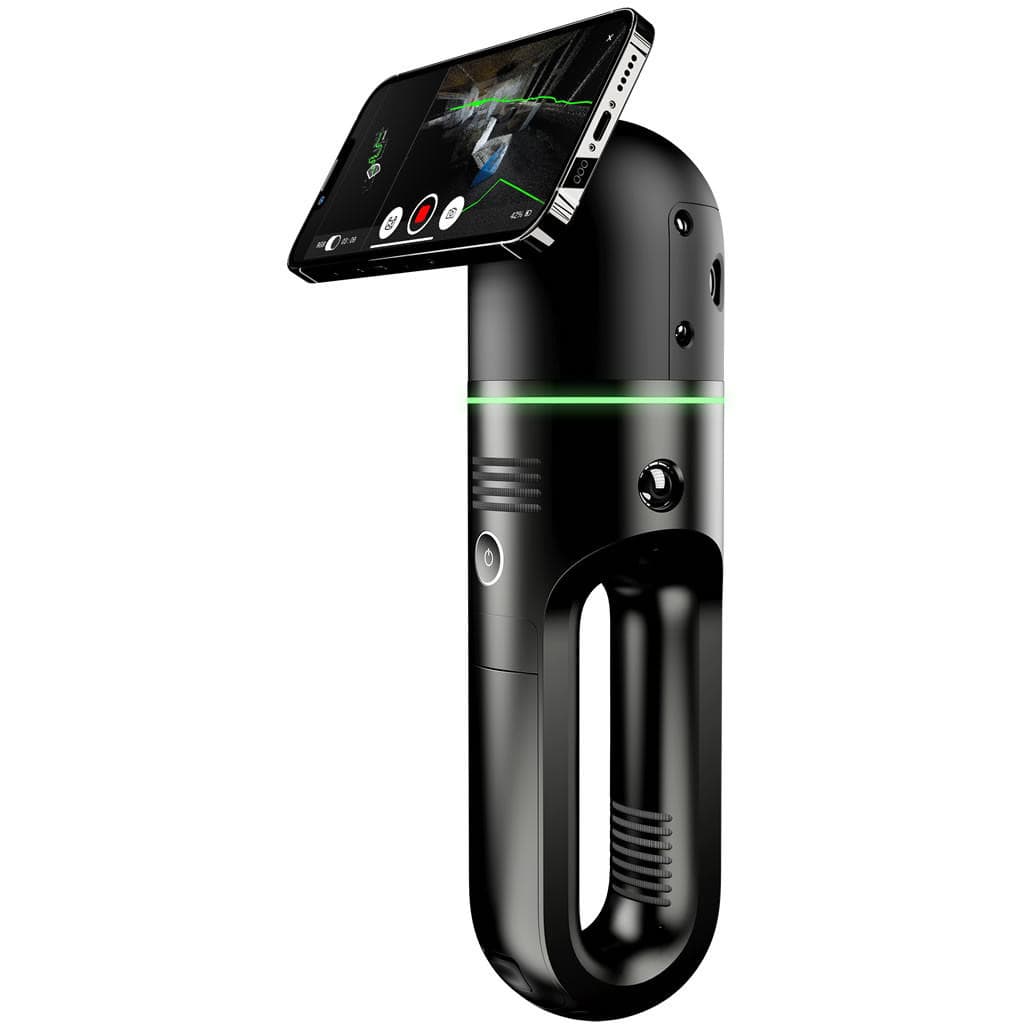
Selecting a handheld 3d scanner requires a technical assessment of the environment’s scale and the required level of detail. The Leica BLK2GO is an ideal solution for surveyors who need to map entire buildings quickly using GrandSLAM technology for seamless mobility. If the project involves high-precision industrial inspection, a Creaform HandySCAN provides the sub-millimetre accuracy necessary for quality control and aerospace applications. When evaluating portable handheld 3d scanner options, procurement teams should prioritize the ease of software integration and the device's ability to handle low-light conditions or complex textures.