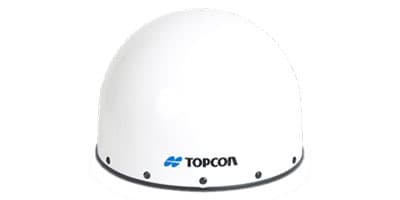
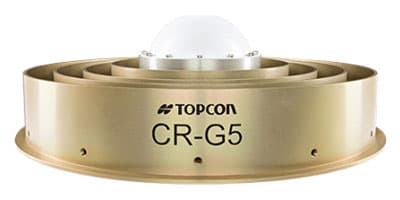
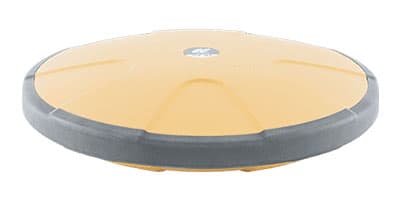
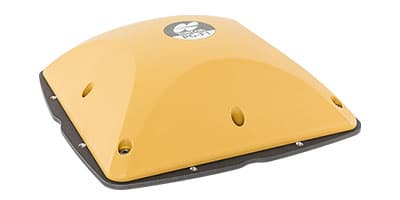
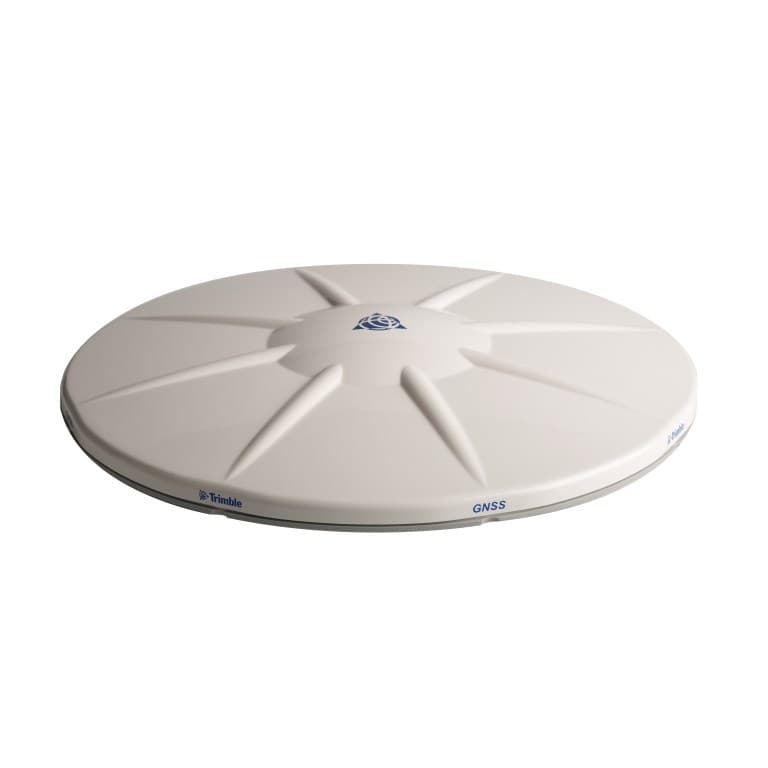
GNSS Antenna - Geodetic & Survey Antenna Systems
A GNSS antenna is a critical hardware component designed to capture high-frequency signals from satellite constellations and convert them into electrical currents for a receiver to process. Its primary technical advantage lies in maintaining phase centre stability and providing superior multipath rejection, which are essential for achieving centimetre-level accuracy in positioning. These systems are indispensable for permanent CORS networks, RTK GNSS receiver base stations, and high-precision UAV integration.
Key Features & Specifications
Phase centre variation (PCV): Achieves < 1 mm for geodetic choke ring antennas, a requirement for IGS-calibrated reference stations.
Frequency bands: Full-band coverage for L1/L2/L5 (GPS), G1/G2/G3 (GLONASS), E1/E5a/E5b (Galileo), and B1/B2/B3 (BeiDou).
Gain: Optimized signal reception with 0-5 dBic at zenith and >-5 dBi at 10-degree elevation for low-elevation satellite tracking.
Axial ratio: Measures circular polarisation quality at < 3 dB, ensuring superior rejection of reflected multipath signals.
Connector type: Standard TNC or SMA female connectors with cable loss requirements of < 2 dB per 10 m of RG-58.
Operating temperature: Robust environmental resistance from -40°C to +75°C with IP67 protection for permanent outdoor installation.
Calibration: Support for NGS absolute calibration and IGS antenna models for precise vertical positioning.
How to Choose the Right GNSS Antenna
Selecting the correct antenna requires distinguishing between rover models, which are often integrated, and geodetic antennas used for fixed infrastructure. For a permanent reference station, an IGS-calibrated choke ring antenna like the Leica AR25 is mandatory to mitigate ground-plane reflections, while a lightweight Trimble Zephyr Geodetic 2 is ideal for portable base and rover set configurations. Engineers must also verify that the receiver's firmware supports the specific antenna calibration data to ensure the phase centre offsets are applied correctly during processing.